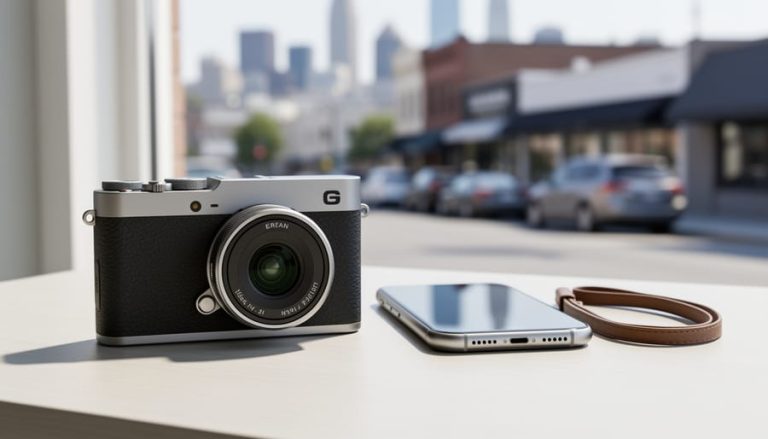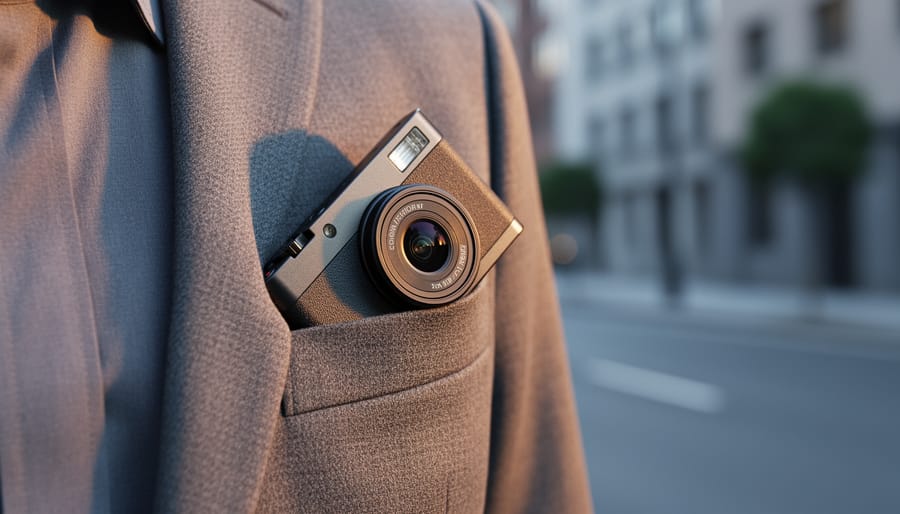
Ultra compact cameras occupy a unique space in 2026: they’re smaller than your smartphone yet pack dedicated imaging hardware that can outperform it in specific situations. These pocket-sized shooters typically measure less than 100mm at their widest point and weigh under 200 grams, making them genuinely disappear into a jacket pocket or small purse.
The core appeal is simple. You get a real zoom lens, often 3x to 5x optical, in a body that doesn’t require a dedicated camera bag. Sensor sizes range from 1/2.3-inch up to 1-inch in premium models, delivering better low-light performance and background blur than most phones. Physical controls, including a dedicated shutter button and zoom rocker, give you tactile feedback that touchscreens can’t match.
But there are real compromises. Image quality falls short of larger compact cameras and certainly can’t touch what interchangeable lens systems deliver. Most ultra compacts sacrifice manual controls for size, leaving you with automatic or scene modes. Battery life is constrained by tiny power cells, sometimes limiting you to 200 shots per charge.
The sweet spot for these cameras is travel photography where every ounce matters, casual family documentation, or as a backup to larger gear. If you’re shooting in challenging light, need extensive manual control, or plan to print large, you’ll quickly bump against their limitations. For daylight snapshots with more reach than your phone offers, they’re perfectly capable.
This guide examines the best ultra compact cameras available in 2026, comparing specs that actually matter and identifying which models deliver the best value for different shooting styles.
What Makes a Camera ‘Ultra Compact’?
An ultra compact camera is any model you can comfortably slide into a jacket pocket or small bag without thinking twice. Industry convention treats anything under 300 grams and smaller than 120mm × 70mm × 40mm as genuinely ultra compact, though the best examples often weigh closer to 200 grams and measure under 100mm in width.
These cameras occupy a distinct space between your smartphone and standard compact cameras. A typical compact might weigh 400-500 grams with a protruding zoom lens, making it a deliberate carry item rather than an everyday companion. Ultra compacts sacrifice some versatility to prioritize true pocketability, while mirrorless cameras with interchangeable lenses start around 400 grams for the body alone and require you to think about lens choices, extra batteries, and protective cases.
Three design decisions enable this extreme portability. First, most ultra compacts use fixed lenses that don’t extend when you shoot, eliminating moving parts and reducing bulk. Second, they typically feature smaller sensors than full-frame or APS-C mirrorless bodies, though premium models like the Fujifilm X100VI pack APS-C sensors into surprisingly compact frames. Third, manufacturers integrate every component tightly, eliminating air gaps and modular elements that add weight.
- Fixed lens
- A permanently attached lens that cannot be removed or changed, allowing tighter integration and smaller overall camera dimensions than interchangeable lens systems.
- Sensor size
- The physical dimensions of the image sensor, typically measured in inches or compared to full-frame. Larger sensors generally deliver better image quality but require bigger camera bodies and lenses.
- Focal length
- The optical distance that determines your field of view, expressed in millimeters. A 28mm focal length is wider than 50mm, capturing more of a scene.
- Pocketability threshold
- The practical size and weight limit where a camera transitions from true pocket carry to requiring a dedicated bag or case, typically around 300 grams and 40mm thick.
The result is a camera that won’t weigh down your coat or create an obvious bulge in your bag. This focus on minimal size means real trade-offs compared to the compact vs smartphone upgrade decision many buyers face, but for specific shooting scenarios, that portability becomes the decisive advantage. You’re choosing deliberate limitations in exchange for a camera you’ll actually have with you when moments happen.
Who Should Consider an Ultra Compact Camera?
Ultra compact cameras aren’t for everyone, and that’s perfectly fine. Before you invest in one, it’s worth understanding whether your shooting style actually aligns with what these pocket-sized devices do best.
Travelers top the list of ideal users. If you’ve ever wrestled with packing decisions or felt the weight of camera gear after a full day exploring a new city, you’ll appreciate what ultra compacts offer. They slip into jacket pockets or small crossbody bags without announcing themselves, leaving room for other essentials. You’ll actually bring them along on spontaneous detours rather than leaving them at the hotel because they’re too bulky to carry.
Street photographers find ultra compacts invaluable for their discretion. A camera that doesn’t scream “photographer” lets you capture candid moments without changing the scene. The Ricoh GR IV has built its reputation specifically on this strength, offering serious image quality in a body that looks almost casual.
Smartphone upgraders represent another natural fit. Maybe you’ve hit the limits of computational photography and want larger sensors, better low-light performance, and manual controls, but you’re not ready to commit to an interchangeable lens system. Ultra compacts bridge that gap without adding significant bulk to your daily carry.
Casual shooters who value simplicity also benefit. If you want better photos than your phone delivers but don’t want to navigate complex menus or swap lenses, an ultra compact with intuitive controls offers a sweet spot between capability and ease of use.
However, ultra compacts have clear limitations. Skip them if you’re shooting sports or wildlife, where you need long telephoto reach and fast-tracking autofocus. Studio photographers require more flexibility than fixed or limited-zoom lenses provide. Anyone regularly shooting in challenging conditions, rapid action sequences, or needing extensive lens options should look at larger compact formats or mirrorless systems instead.
The honest question: will you actually carry it? If the answer isn’t a confident yes, a more capable but bulkier camera gathering dust at home won’t serve you better than an ultra compact that’s always with you.
Key Features to Evaluate
Sensor Size and Image Quality
The sensor is the digital heart of any camera, and in ultra compacts, its size determines the ceiling for image quality. Most smartphones use sensors around 1/2.3-inch or smaller, which is why dedicated cameras need something bigger to justify the purchase.
You’ll encounter three main sensor sizes in ultra compact cameras. The smallest, 1/2.3-inch sensors, appear in budget models and offer only marginal improvements over phones. One-inch sensors represent the sweet spot for many compact cameras, delivering noticeably better low-light performance and dynamic range while keeping bodies genuinely pocketable. At the premium end, a few ultra compacts pack APS-C sensors, the same size found in most entry-level mirrorless cameras, which produce images that rival far larger systems.
The physics is straightforward: larger sensors collect more light per pixel, reducing noise when you’re shooting indoors or after sunset. They also enable better separation between your subject and the background, creating that pleasing blur (bokeh) that screams “real camera.”
Here’s the trade-off: cameras with one-inch or APS-C sensors cost significantly more and might push the boundaries of true pocket portability. But if you’re upgrading from a smartphone specifically for better image quality, skipping straight to a one-inch sensor model makes sense. Cameras with smaller sensors often disappoint because they don’t deliver enough improvement to justify carrying a separate device. The Fujifilm X100VI’s APS-C sensor, for instance, produces 40MP stills with low-light capability no phone can match, though it sits at the upper limit of what you’d call ultra compact.
Lens Specifications
Ultra compact cameras split into two distinct camps: fixed prime lenses and zoom lenses. Prime lens models, like the Fujifilm X100VI with its fixed 35mm-equivalent focal length, shave millimeters and grams by eliminating zoom mechanisms. No moving parts means a simpler, slimmer body that genuinely fits a jacket pocket. You sacrifice flexibility, but gain maximum compactness and often faster apertures.
Zoom-equipped models, such as the Sony RX100 VII, pack 24-200mm equivalent range into roughly the same footprint. They handle more shooting scenarios without changing position, though the lens assembly adds bulk and complexity. Most ultra compact zooms max out around f/2.8 at the wide end, narrowing to f/4.5 or smaller when zoomed in.
Aperture ratings directly affect your shooting envelope. An f/1.8 or f/2 prime lens pulls in significantly more light than an f/4 zoom, allowing faster shutter speeds in dim environments and creating stronger background blur for subject separation. If you shoot indoors, at dusk, or want that shallow depth of field look, prioritize wider maximum apertures.
Focal length determines your perspective and working distance. Most ultra compacts favor wide to normal angles, 28mm to 50mm equivalent, because these suit everyday shooting and street photography while keeping the lens assembly compact. Longer focal lengths require bigger glass, which defeats the portability purpose. Choose your focal length based on what you actually shoot: tight spaces favor wider angles, while portraits benefit from the 50mm range.
Controls and Usability
Ultra compact cameras force tough decisions about controls. You can’t fit a full array of buttons and dials onto a body that slips into your jeans pocket, so manufacturers choose different compromises. Some models, like the Fujifilm X100VI, keep dedicated exposure dials and a good selection of physical controls despite the compact size. Others bury most settings in menus, prioritizing simplicity over quick adjustments. Think about your shooting style: if you frequently change aperture or ISO on the fly, a menu-heavy camera will frustrate you.
Viewfinders vary dramatically across ultra compacts. The X100VI includes a hybrid optical/electronic viewfinder, letting you see the scene directly or preview exposure settings. Many ultra compacts skip the viewfinder entirely, relying only on the rear screen. This saves space and cost but makes shooting in bright sunlight harder and changes the shooting experience. If you’re used to holding a camera to your eye, a screen-only design takes adjustment. Electronic viewfinders (EVFs) sit between these extremes, offering eye-level composition with exposure preview in a compact package.
Touchscreens now appear on most ultra compacts, simplifying focus point selection and menu navigation. They’re particularly helpful when physical buttons are limited. However, small bodies mean small screens, and your nose might accidentally trigger the touchscreen when using a viewfinder.
Ergonomics matter more than spec sheets suggest. A camera that’s too small for your hands won’t get used, no matter how pocketable it is. Grip depth, button placement, and whether you can operate controls without shifting your hold all affect real-world usability. Handle the camera before buying if possible.
Standout Ultra Compact Models for 2026
Three cameras stand out in 2026’s ultra compact field, each excelling in distinct scenarios. Your choice depends on whether you prioritize creative control, zoom versatility, or absolute pocketability.
Fujifilm X100VI: The Premium All-Rounder
The X100VI represents the gold standard for enthusiasts willing to invest in a compact. Its X100VI 40MP and 6K capabilities deliver image quality that rivals much larger cameras, while the fixed 23mm f/2 lens (35mm equivalent) covers the sweet spot for street photography, travel, and everyday shooting. The hybrid viewfinder lets you toggle between optical and electronic views, offering a tactile shooting experience that smartphones can’t replicate.
What sets this camera apart is its physical control layout. Dedicated dials for shutter speed, aperture, and exposure compensation mean you can adjust settings without diving into menus. The downside? That fixed focal length isn’t for everyone. You’ll need to move your feet to reframe shots, which becomes second nature but demands a different shooting approach than zoom-equipped alternatives. It’s also considerably larger than true pocket cameras, requiring a jacket pocket or small bag rather than fitting in jeans.
Sony RX100 VII: The Smartphone Upgrader’s Gateway
If you want better-than-phone results with some zoom flexibility, the RX100 VII hits a practical middle ground. Its 24-200mm equivalent zoom range covers wide landscapes and distant subjects, making it genuinely versatile for travel. The 1-inch sensor won’t match the X100VI’s output, but it delivers noticeable improvements over any smartphone, especially in challenging light.
This camera truly fits a front pocket, which matters more than spec sheets suggest. You’ll actually carry it daily because it doesn’t feel like luggage. The tilting touchscreen and fast autofocus make it approachable for beginners, while manual controls satisfy more experienced shooters. It won’t win points for tactile charm, the small body means cramped controls, but the convenience factor keeps it in regular rotation when larger cameras stay home.
Ricoh GR IV: The Street Photography Specialist
The GR IV strips everything down to essentials: a fixed 28mm f/2.8 lens (equivalent) in an absurdly slim body with an APS-C sensor. It’s genuinely pocketable despite that larger sensor, making it the street photographer’s weapon of choice. The wide lens forces you close to subjects, creating intimate perspectives that telephoto shooters miss.
This camera rewards patience. There’s no viewfinder, no zoom, and limited video features. What you get instead is exceptional image quality in a body that disappears in your hand. The snap focus feature lets you preset a distance and shoot from the hip, perfect for candid moments. If you shoot one focal length consistently and prioritize discretion over versatility, the GR IV delivers more image quality per cubic inch than anything else available.
None of these cameras work for every situation. The X100VI demands commitment to a single focal length, the RX100 VII sacrifices some image quality for zoom convenience, and the GR IV requires adapting to a specific shooting style. Match your choice to how you actually shoot, not how you imagine you might.
Ultra Compact vs. Your Smartphone
Let’s be clear: your smartphone camera has gotten really good. Computational photography, night mode, portrait blur, and instant sharing make it tough to justify carrying anything extra. So when does an ultra compact camera actually earn its place in your pocket?
The answer hinges on what you prioritize. If you’re satisfied with your phone’s output and rarely wish you had more control, you probably don’t need a dedicated camera. But if you’ve ever felt limited by your smartphone’s processing decisions, struggled with low-light shots that look smeared, or wanted genuine manual control, an ultra compact offers tangible advantages.
| Criterion | Ultra Compact Camera | Smartphone |
|---|---|---|
| Image Quality | Larger sensor, better optics, RAW files | Heavy computational processing, small sensor |
| Manual Controls | Physical dials, aperture priority, full manual | Limited or menu-buried controls |
| Convenience | Separate device to carry and charge | Already with you, instant sharing |
| Battery Life | Dedicated battery, 200-400 shots typically | Drains phone battery throughout day |
| Cost | $500-$1,600 additional investment | Already owned |
The sensor advantage matters most in challenging light. A 1-inch or APS-C sensor captures significantly more light than your phone’s tiny sensor, producing cleaner images at higher ISOs without aggressive noise reduction that destroys detail. You’ll notice this difference in dimly lit restaurants, golden hour landscapes, or any situation where your phone switches to night mode.
RAW shooting gives you actual editing latitude. Phone JPEGs are baked with processing decisions you can’t undo. A RAW file from an ultra compact preserves highlight and shadow detail, lets you adjust white balance without degradation, and responds to editing like a proper photograph rather than a computational composite.
Manual controls change how you shoot. Physical dials for shutter speed and aperture let you respond quickly to changing conditions. You can intentionally blur motion, control depth of field, or lock exposure independently of focus. This isn’t just technical flexibility; it’s creative control that affects your finished images.
Where smartphones win decisively: convenience and computational tricks. Your phone is already in your pocket, connects instantly to share images, and can merge multiple exposures to create HDR shots or extend dynamic range beyond what a single RAW frame captures. For many people, those advantages outweigh everything else.
The honest take? If you shoot casually and value ease above all, stick with your phone. If you find yourself frustrated by its limitations or want to grow beyond automatic modes, an ultra compact justifies itself through better image quality and genuine creative control.
What You’ll Actually Carry
The difference between a camera you own and a camera you use comes down to one thing: will you actually carry it? A camera that lives in your closet because it’s “too bulky for today” serves no purpose, regardless of its specifications.
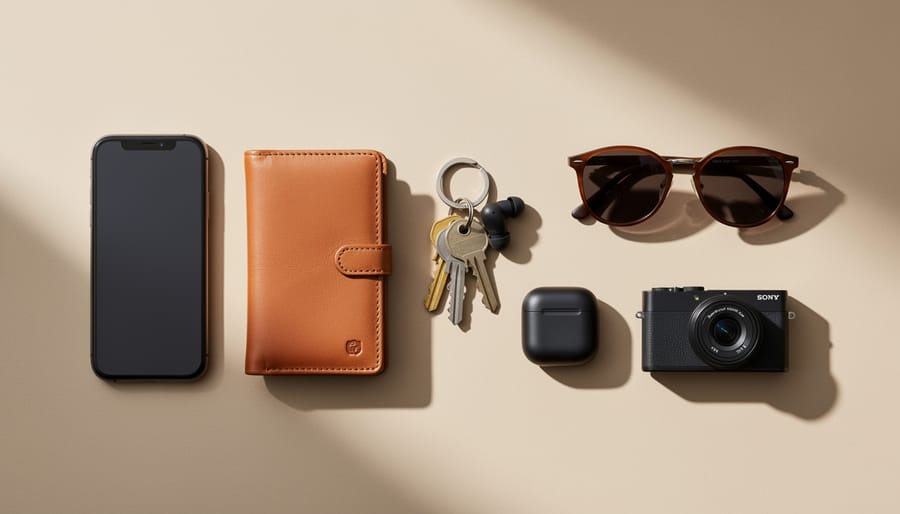
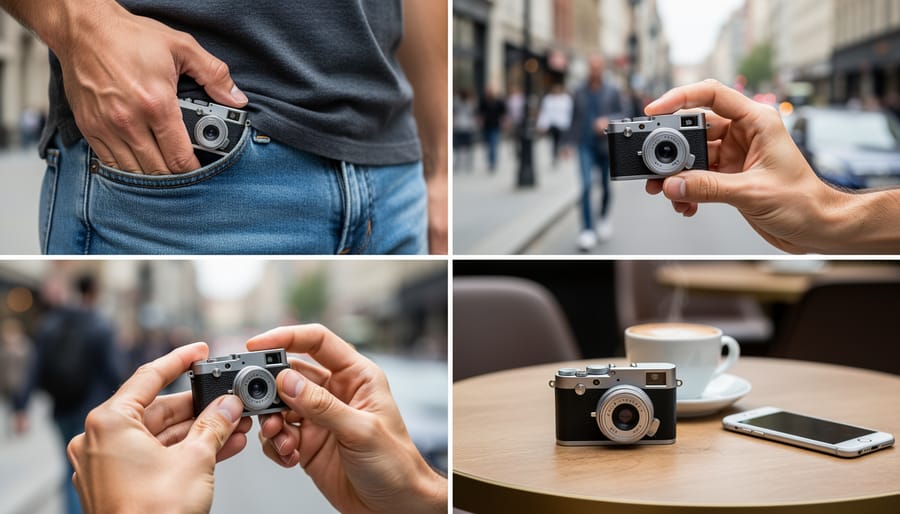
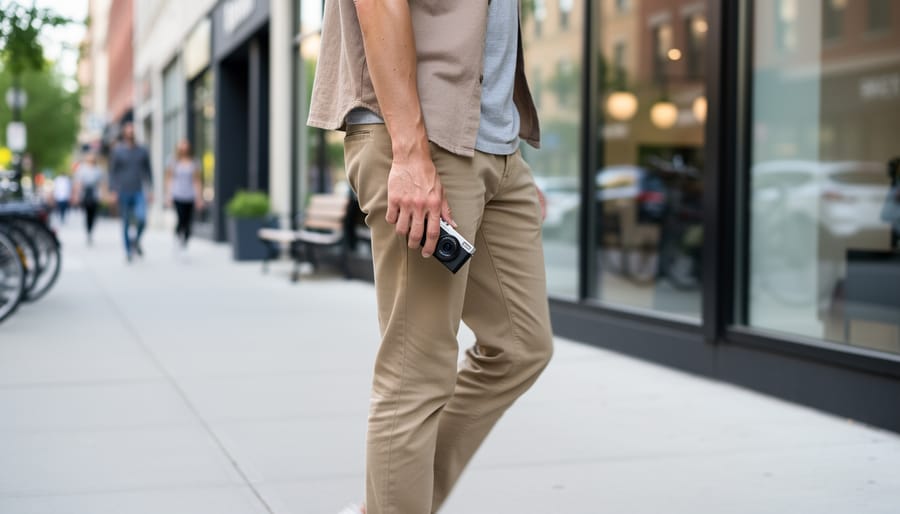
Before buying any ultra compact, test the pocket scenario you’ll use most often. Slip the camera into your jacket pocket and walk around the store. Sit down. Bend over. Does it feel secure, or does it pull awkwardly? Try your jeans pocket if that’s your intended carry method, most ultra compacts won’t work here, and discovering this after purchase is frustrating.
Consider your daily reality, not your ideal scenario. If you commute with a messenger bag, even a slightly larger compact might work perfectly. If you run errands in a T-shirt and jeans, you need something that genuinely disappears into a shirt pocket. The X100VI, despite its excellence, weighs around 500 grams with battery, manageable in a coat pocket, questionable for all-day neck carry without a strap.
Weight matters as much as dimensions. A camera that’s thin but heavy will still bounce annoyingly in your pocket. Cameras under 300 grams typically vanish into daily life; above that, you’ll feel them.
Track your actual behavior for a week before deciding. Which bag or jacket do you grab most mornings? Do you carry a purse or backpack daily, or do you prefer traveling light? Your honest carrying habits, not your aspirations, should determine which ultra compact makes sense. The camera you leave home is the one that fails you.
Making Your Decision
Start by mapping your primary use case to your essential features. If you’re traveling and need true pocketability above all else, prioritize a lightweight body with a fixed lens, even if that means sacrificing zoom flexibility. Street photographers should focus on discreet dimensions, quiet shutters, and fast autofocus that won’t draw attention or miss fleeting moments. For everyday carry, consider which camera you’ll genuinely slip into your jacket or bag every morning, not the one with the most impressive spec sheet.
Your creative goals shape which compromises you can live with. If you’re experimenting with manual controls and learning photography fundamentals, invest in a model with dedicated dials and customizable buttons rather than one that buries everything in menus. Casual shooters who want something better than a smartphone but won’t tweak settings constantly might prefer touchscreen simplicity and reliable auto modes.
Budget naturally constrains your options, but think beyond the initial purchase. Ultra compacts with larger sensors and premium lenses cost more upfront yet deliver image quality that keeps pace with your skills as you improve. Entry-level models save money but may leave you wanting an upgrade within a year. Consider the total cost of ownership, including accessories like spare batteries and memory cards.
Before committing, handle the camera in person if possible. What feels comfortable in a store display might prove awkward after an hour of shooting. Check whether the controls fall naturally under your thumb, whether the viewfinder works with your glasses, and whether the weight distribution feels balanced. Some cameras look identical on spec sheets but handle completely differently in real use.
Remember that the perfect ultra compact doesn’t exist, every model reflects deliberate trade-offs. Choose the camera whose specific strengths align with your shooting priorities, and accept its limitations as the cost of extreme portability.
Ultra compact cameras won’t replace a full photography kit, but that’s never been their purpose. They excel in a specific scenario: when you need genuinely pocketable gear that still delivers image quality your smartphone can’t match. If you routinely leave your camera at home because it’s too bulky, an ultra compact might see more real-world use than technically superior equipment that stays in your closet.
The question isn’t whether these cameras offer the best image quality or most features per dollar, they don’t. It’s whether the portability-to-performance ratio matches your actual shooting habits. Be honest about how often you’ll carry something the size of a deck of cards versus something that requires a dedicated bag. Test the physical dimensions before buying if possible. Slip a mockup into your jacket pocket and walk around. Weight matters less than you’d think; pocketability is about dimensions and profile.
Entry-level compact cameras come in many forms, from bridge cameras with massive zoom ranges to larger-sensor models with interchangeable lenses. Ultra compacts sacrifice some capabilities for extreme portability. That trade-off makes sense for travel photographers, street shooters, and anyone who values having a real camera available over having the theoretically best camera sitting unused at home. Choose based on what you’ll actually carry, not what sounds impressive on paper.