Hemp-derived cannabis photography requires specific camera equipment and lighting techniques that capture the product’s crystalline trichomes, intricate terpene profiles, and vibrant colors without legal or commercial complications. Whether you’re shooting product images for an Exhale Wellness store or building a portfolio in this growing niche, you’ll need macro-capable cameras with high resolution (minimum 24MP), excellent color accuracy, and manual controls that let you finesse exposure for hemp’s reflective surfaces.
The challenge goes beyond standard product photography. Hemp flowers present unique visual characteristics: dense trichome coverage that can blow out highlights, subtle color gradations from green to purple that demand precise white balance, and textures that need depth without losing detail. You’re not just documenting a product. You’re translating its quality markers into visual proof for discerning customers who rely on imagery to assess potency and freshness before purchase.
This article breaks down the camera bodies, lenses, and lighting setups that consistently deliver professional results in hemp photography. You’ll learn which focal lengths reveal trichome detail without distortion, how to manage the reflective properties of resinous surfaces, and why your white balance settings matter more here than in almost any other product category. We’ll also cover the compositional approaches that satisfy both commercial clients and legal compliance requirements, giving you a complete technical framework for this specialized photography genre.
Camera Equipment That Works Best for Hemp Product Photography
Macro Lenses for Capturing Detail
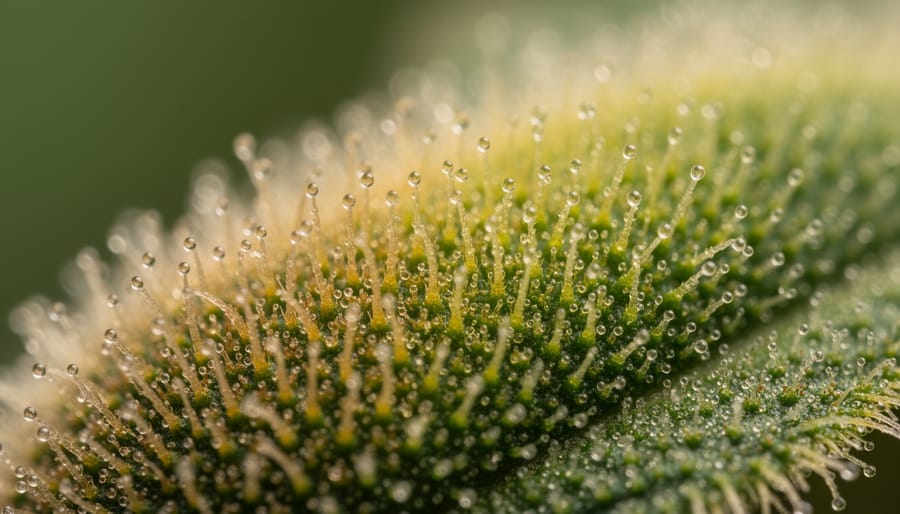
Hemp-derived cannabis products sell based on visible quality markers, trichomes, crystal structures, and resin density, that standard lenses simply cannot capture effectively. Macro lenses transform these microscopic details into compelling product images that prove quality to discerning customers. Without magnification capabilities, you’ll miss the crystalline structures that distinguish premium hemp from mediocre offerings.
For most commercial hemp photography, a 100mm macro lens delivers the ideal balance. It provides 1:1 magnification for extreme close-ups while maintaining comfortable working distance from your subject, critical when setting up lighting around delicate products. The longer focal length compresses backgrounds naturally, keeping focus on trichome detail rather than distracting elements. Pair it with current DSLR and mirrorless camera bodies for optimal autofocus performance and high-resolution capture.
A 60mm macro works well in tight studio spaces or for full-product shots that still show surface detail. However, its shorter working distance means lights and reflectors crowd your setup quickly. The 180mm focal length suits specialized trichome photography when you need extreme detail capture from farther away, though it demands solid tripod support and precise focusing technique.
Focus on lenses with maximum apertures of f/2.8, which give you flexibility in depth of field control. When shooting at 1:1 magnification, depth of field measures in millimeters, even at f/11 or f/16, so plan for focus stacking techniques covered in later sections. Image stabilization helps but never replaces proper tripod technique for critical detail work.
Sensor Size Considerations
Sensor size shapes how much detail you capture and how easily you control depth of field. Full-frame sensors deliver exceptional resolution and allow extremely shallow depth of field at wider apertures, ideal when you need to isolate individual hemp buds against a blurred background. They also excel in low-light situations, producing cleaner images at higher ISOs when working with continuous lighting.
APS-C sensors offer practical advantages for hemp photography: the crop factor effectively increases your lens’s reach, turning a 100mm macro into approximately 150mm equivalent. This extra working distance helps when lighting tight product setups without casting shadows. Image quality remains excellent for most commercial applications, and the bodies typically cost less than full-frame alternatives.
Medium format sensors capture extraordinary detail in hemp’s trichomes and subtle color gradations, making them the choice for large-format print campaigns or high-end packaging photography. However, their shallower depth of field at equivalent apertures means you’ll rely heavily on the focus stacking technique explained in macro work to keep products sharp throughout. For most hemp brands, full-frame or APS-C sensors provide the best balance of image quality, affordability, and practical workflow efficiency.
Lighting Techniques for Hemp Cannabis Products
Natural vs. Artificial Light
Natural window light offers soft, diffused illumination that works beautifully for hemp-derived cannabis products, particularly when you want to emphasize natural textures and organic qualities. Position your setup near a north-facing window for consistent, cool-toned light throughout the day, or use sheer curtains to diffuse harsh direct sunlight. Window light excels at revealing trichome details and creating gentle shadows that add dimension without overwhelming the product’s natural color palette.
Studio strobes provide powerful, controllable light with consistent color temperature (typically 5500K), making them ideal for high-volume commercial shoots where you need repeatable results. They freeze motion and allow smaller apertures for maximum depth of field. However, their intensity can sometimes wash out the subtle green and amber hues in hemp flowers if not properly modified with softboxes or diffusion panels.
Continuous LED lighting splits the difference, offering real-time visualization of how light falls on your product while maintaining precise color temperature control. Many photographers apply product lighting tricks from other specialized fields. Choose high-CRI LEDs (95+ rating) to accurately render hemp’s complex color spectrum, from deep forest greens to golden amber pistils, without introducing color casts that require extensive post-processing correction.
Avoiding Glare on Cannabis Packaging
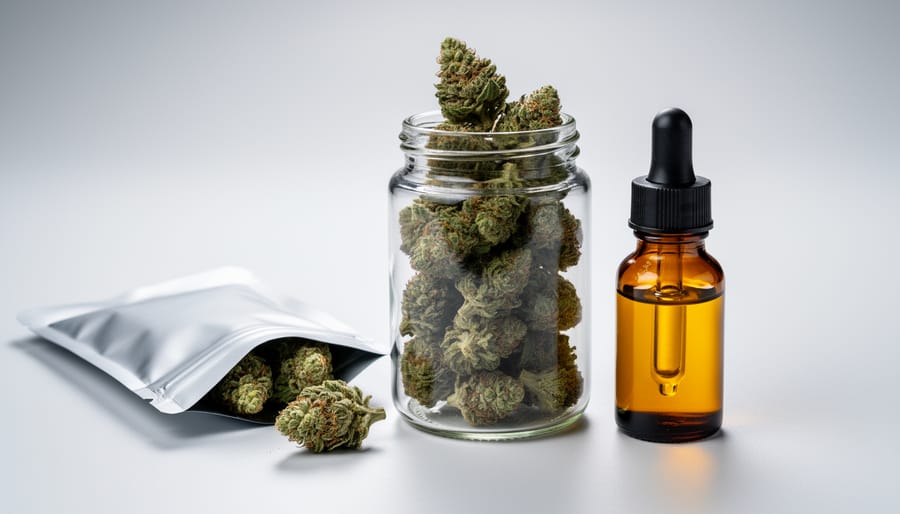
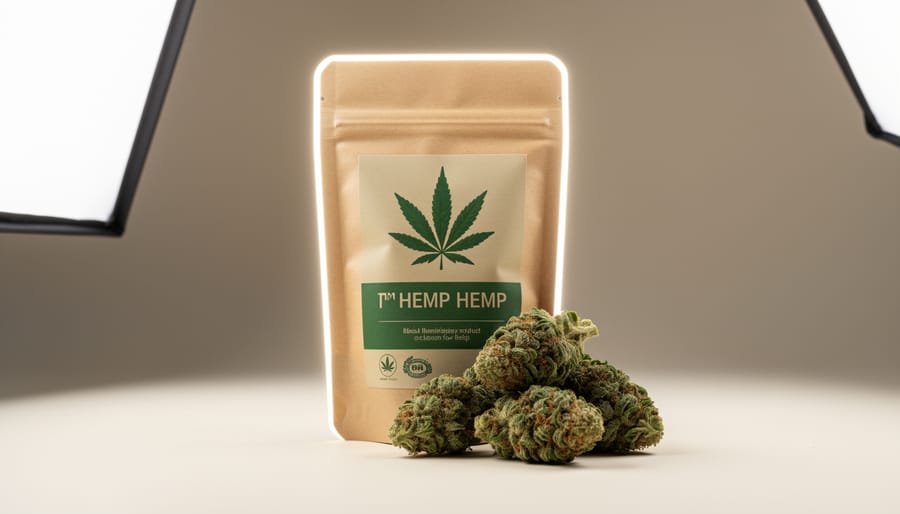
Reflective packaging presents one of hemp photography’s biggest technical challenges. Glass jars catch every light source in your studio, while mylar bags create mirror-like surfaces that reveal everything behind the camera.
The polarizing filter solves most glare problems instantly. Screw a circular polarizer onto your lens and rotate it while watching through the viewfinder, reflections disappear as you find the right angle. This works especially well on glass containers and glossy labels.
Position your lights at 45-degree angles to the product rather than head-on. Direct frontal lighting bounces straight back into your lens, creating hotspots and washed-out areas. Side lighting still illuminates the product while sending reflections away from the camera.
A large diffusion panel between your light and the product softens reflections significantly. White shower curtains or professional scrims spread the light source across a wider area, eliminating harsh reflection spots. The bigger your diffusion, the smoother your results.
For stubborn reflections, tent lighting creates the cleanest results. Surround your product with white fabric or translucent material, then light from outside the tent. The packaging reflects only soft, even white rather than studio equipment and dark spaces.
Camera Settings for Sharp, Detailed Hemp Images
Aperture and Depth of Field
For hemp product photography, your aperture choice determines whether customers see clear, detailed images or frustratingly blurry shots. Start with f/8 to f/11 for most product work, this range keeps the entire product sharp while delivering enough depth to separate it from the background. These middle apertures also minimize lens softness and chromatic aberration that plague wide-open shooting.
When photographing flat-lay arrangements of multiple hemp products, stop down to f/16 or even f/22 to maintain sharpness across everything in the frame. Yes, you’ll need longer exposures or higher ISO, but the trade-off is worth it for catalog shots where every item must be crisp.
For lifestyle imagery where you want that professional background blur, open up to f/2.8 or f/4. This works beautifully when shooting a single hemp jar or tincture bottle against a styled backdrop. The shallow depth of field draws attention to your product while the soft bokeh suggests premium quality, techniques that make photos stand out in crowded online marketplaces.
Remember that macro work naturally creates shallower depth of field, so you may need to stop down two or three stops compared to standard product photography to maintain acceptable sharpness.
Focus Stacking for Maximum Sharpness
Focus stacking solves the macro photographer’s biggest challenge: getting the entire hemp bud or product in sharp focus when shooting at close distances. At typical macro apertures (f/2.8 to f/5.6), your depth of field might span just millimeters, leaving much of the product in soft blur.
The technique is straightforward. Mount your camera on a sturdy tripod and take multiple shots of the same subject, adjusting focus slightly between each frame. Start with the closest point in sharp focus, then gradually move the focus point deeper into the product through 5-15 exposures. Many modern cameras include built-in focus shift shooting that automates this process, check your menu for “focus bracketing” or “focus shift.”
In post-processing, software like Photoshop (Edit > Auto-Blend Layers), Helicon Focus, or Zerene Stacker analyzes each image and combines only the sharp regions into a single composite. The result: every trichome, every leaf edge, every package corner rendered in perfect detail.
For hemp products with complex three-dimensional shapes or multiple items in a scene, focus stacking transforms what would be impossible single-shot captures into commercially viable images that showcase every detail your customers want to see.
Composition and Styling for Hemp-Derived Products
Brand-Compliant Photography
Hemp product photography exists in a complex regulatory environment where compliance can mean the difference between a successful campaign and a rejected listing. While hemp-derived products are federally legal under the 2018 Farm Bill, many platforms treat them with the same restrictions as marijuana.
Facebook and Instagram prohibit direct sales of hemp products and closely scrutinize imagery for content that appears to promote drug use. Avoid showing people consuming products, close-ups of smoking devices, or imagery suggesting psychoactive effects. Amazon requires hemp product photos to show lab testing certificates and prohibits lifestyle images featuring consumption. Google Ads restricts hemp advertising to specific categories and demands clear differentiation from marijuana.
State-specific requirements add another layer. Some states require visible lab testing information or specific disclaimers in product imagery used for local marketing. Always photograph your products with packaging that displays complete compliance information, including net weight, ingredients, and required warnings.
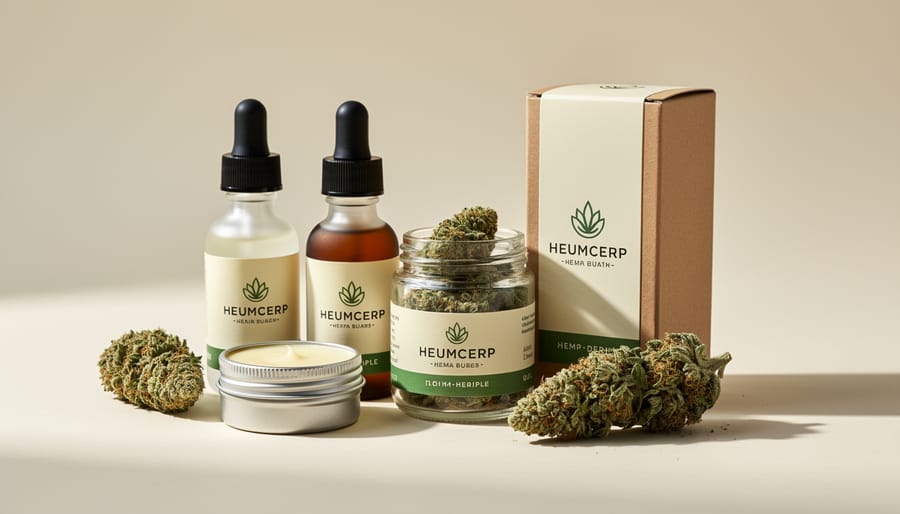
Maintain a compliant photo library by creating clean, professional shots focused on sealed, labeled products against neutral backgrounds. These versatile images work across the widest range of platforms while protecting your brand from takedown notices or account suspensions.
Post-Processing Hemp Cannabis Photos
Color Correction for Accurate Representation
Hemp products display a complex color palette that customers have come to expect: vibrant lime and forest greens, rich purple undertones, and warm amber trichomes. Your editing workflow should preserve these natural hues rather than pushing them into artificial territory. Start in your RAW editor by adjusting white balance, hemp often photographs with a yellow-green cast under standard lighting, so use the eyedropper tool on a neutral gray card shot at the beginning of your session to establish accurate color.
In Lightroom or Capture One, work the HSL sliders carefully. Shift greens slightly toward yellow to bring out that fresh, living-plant quality without making the product look neon. If purple phenotypes are present, gently boost saturation in the magenta and purple channels while pulling back on overall vibrance to avoid oversaturation. For amber trichomes, warm the orange channel and increase luminance to make those crystals pop.
Avoid heavy contrast that crushes shadow detail in the trichome structures, customers want to see depth and dimension. Use selective masking to polish your photos by brightening specific areas like the product foreground while keeping backgrounds subdued. Compare your edited version against the physical product under neutral light before finalizing, if the screen version looks noticeably different, dial back your adjustments.
Common Mistakes to Avoid
Even experienced photographers stumble when they first shoot hemp products. The most damaging mistake is over-editing, cranking saturation to make buds look “more appealing” actually destroys credibility. Customers notice when greens turn neon or when contrast is pushed so hard that trichome detail disappears into blown highlights. Your goal is accurate representation, not fantasy.
Poor focus plagues too many hemp photos. Shooting wide open at f/1.8 might look artistic, but when only a sliver of the product is sharp, you’re hiding what buyers need to see. Choose f/8 or narrower for product shots, and if one frame can’t hold focus across the entire subject, use focus stacking instead of hoping shallow depth of field reads as professional.
Inadequate lighting shows immediately. Single-source overhead lighting creates harsh shadows that obscure texture and make products look flat or amateurish. You need fill light to open shadows and reveal the three-dimensional structure of buds and the clarity of packaging details. Dark, underexposed images suggest corner-cutting, not premium quality.
Compositional laziness kills commercial value fast. Centering every product in the frame with no attention to negative space or visual flow makes your portfolio forgettable. Cluttered backgrounds, distracting props, or packaging placed at odd angles all signal inexperience. Keep compositions clean, purposeful, and aligned with how this product will actually appear in e-commerce or marketing materials.
Successful hemp-derived cannabis photography requires balancing technical precision with creative vision. The combination of quality macro lenses, proper lighting control, and meticulous camera settings creates images that showcase product details while building brand trust in a competitive market.
Your equipment choices matter significantly. Full-frame cameras with capable macro lenses capture the intricate trichomes and textures that differentiate premium hemp products. Controlled lighting setups eliminate glare from packaging while revealing natural colors accurately. These investments pay dividends through images that convert browsers into buyers.
Beyond gear, mastering techniques like focus stacking and color correction separates professional hemp photography from amateur attempts. The ability to work within platform compliance requirements while maintaining visual appeal demonstrates specialized knowledge that brands value.
This niche continues expanding as hemp-derived products gain mainstream acceptance. Photographers who develop expertise in capturing these products position themselves advantageously. The technical skills translate across product photography categories, while the specialized understanding of hemp’s unique visual characteristics creates opportunities in a market where quality imagery directly impacts sales performance.
Start with solid fundamentals, invest in appropriate equipment as your skills develop, and continuously refine your approach based on what resonates with your target audience.